Two weekends ago, I had the great pleasure of leading a judges’ seminar for the Norwegian Spaniel club, masterminded by Frank and Stig of Westaway English and Welsh Springer fame, plus the occasional Irish Water Spaniel on the team. The seminar was held in the Quality Inn hotel near Oslo airport, and it was an ideal location with an excellent conference room for tables and desks at the front and plenty of space to the rear for watching dogs move, judge. The master of ceremonies each day, who kept us all on our toes and made sure we were running to plan, was Welsh Springer enthusiast Niclas Strom, the voice of calm and free of stress, which is essential when I have to cope with IT. My attendance at Silver Surfer classes was little help to me, and my patience with laptop technology is zero. However, Niclas ironed out the few hitches that cropped up over the two days, and all went to schedule.
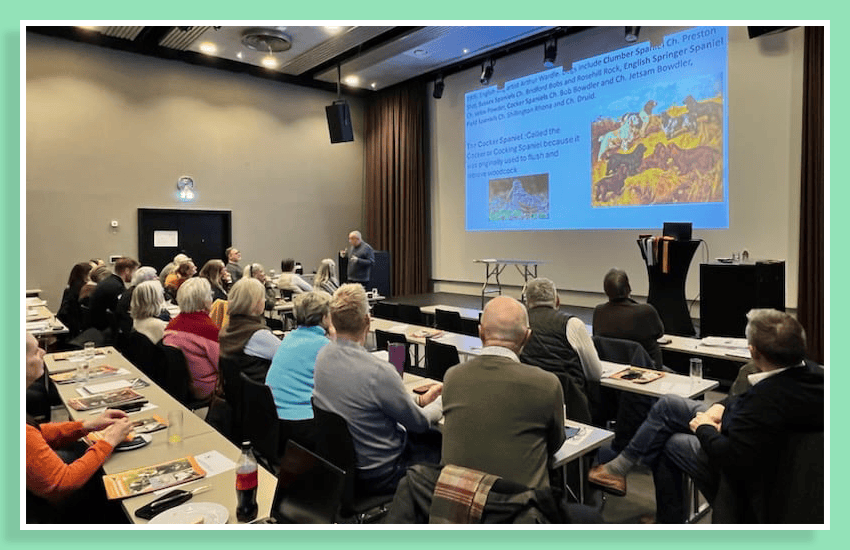
38 people were attending, all qualified judges of spaniels and some with all breed licences, so the discussion was lively, which is always a bonus as sharing ideas is a great way to learn. However, I have to say that it is the people who bring their dogs who determine the success or otherwise of a seminar. Without dogs to look at and discuss, and with owners who are generous enough to let us handle and discuss the pros and cons, a seminar would be lost. How many times did I attend seminars as a student with the chance to handle dogs and write critiques about them, only to find that the speakers did not give the students any idea of what we should have found in the dogs presented for us? That is a lost learning opportunity. I always look at the dogs before the seminar starts and tell the owners what I would like to say about their dogs, their plus points and the areas where they might be better. I ask their permission to share my thoughts with the candidates after they have seen them, standing and moving, and I will always couch criticism it in gentle terms. With sensitive and respectful management, I have always found owners very happy to have their dogs discussed. Plus, I always emphasise that this is my vision of the dog, and it is subjective. No judge is the voice of God, despite some who think they are; those judges who like to influence others to think the same way as they do. The late Bobby James, one of the very best judges from the UK, whom I was very fortunate to have as a mentor when I was starting as a judge, was renowned for the accuracy and recall in his critiques, so the reader could envisage the dog being described. His critiques repeatedly used the word “I” or “For me” to emphasise that these comments were his subjective opinion and not God -given facts. As Bobby didn’t drive, it was always an educational pleasure to drive him to shows which we were both attending, and I learned a lot and two of these things I practice in my own judging. Bobby suggested that before moving in to have a hands-on examination of a dog, the judge should stand back and take in the whole outline and balance of the dog. The judge should take in the overall appearance of the dog, a clause from our breed standards that is often neglected by judges rushing in to look at the details of the dog. When I was a lecturer and advising students in writing dissertations or essays, I recommended starting with an overall discussion of the topic before going into” details”.Look at the forest before you examine the trees, the branches and the leaves,” was the metaphor I used, and it applies equally to examining dogs. Is the overall picture pleasing and exemplifying type, or do you let details like a light eye or a short upperarm dominate your opinion?
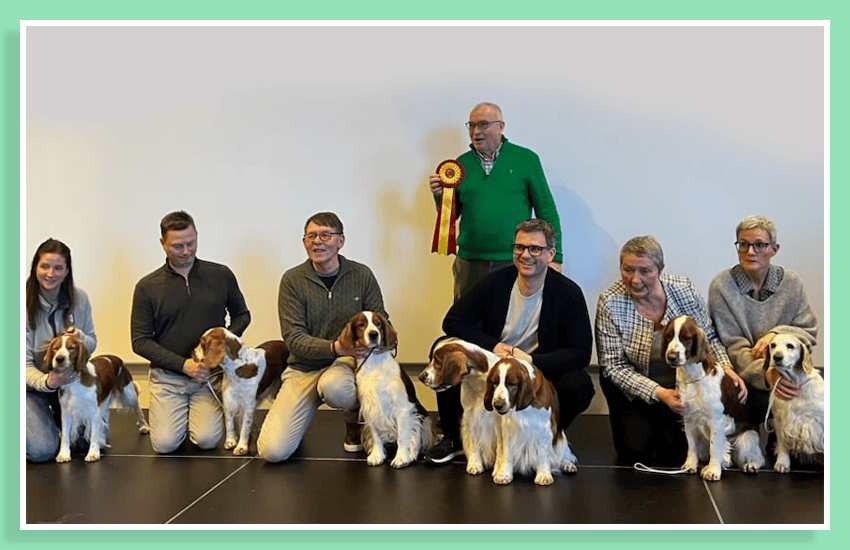
We covered these points, and many others, at the seminar, and all was made possible by those who brought dogs to fire the discussion. First off were the Welsh Springers a very interesting group of seven, a couple of top-notch ones and some teenagers, all with something to offer. I stress the need to look for positives and not base an opinion on faults and features that might be improved. What impressed me greatly was the temperament of all the dogs. We also discussed frequently seen failings in breed balance.
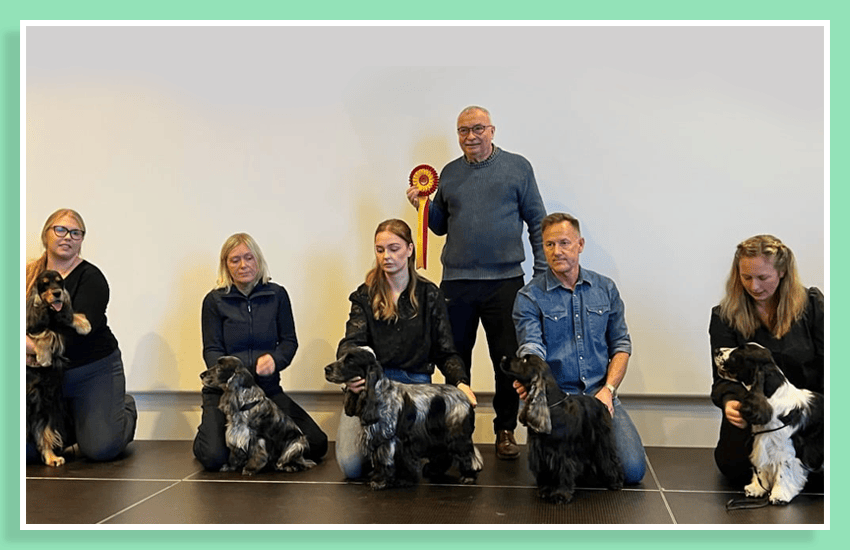
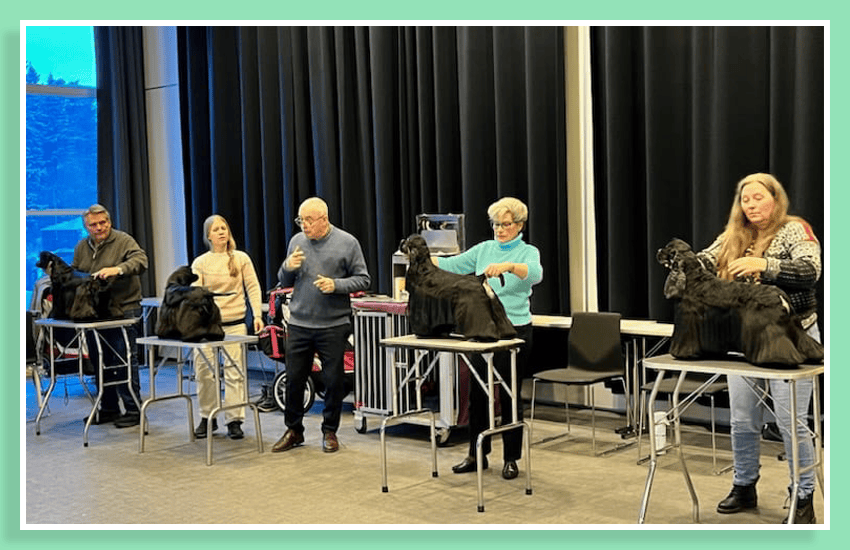
The room had plenty of space, and the judges were positioned so they could see out and back movement, profile action and topline. It was like a judging experience without the stress, and a great way to learn. At the end of each breed, we had a broad discussion of the merits and places for improvement in each dog. There was a great atmosphere of openness and respect for the dogs and the generosity of their owners in allowing this. A lap of honour, an appreciative round of applause for dogs and owners and a photo call ended each session.
It was a wonderful weekend, as the photos might reflect. Whilst many were taken at the seminar, I took along a photo which is special to me, taken almost 35 years ago. Can you spot it with the Freddie Mercury moustache, the slim figure and the very full flares? The English Springer in the picture is winning the group under me at the NKK show in 1991. Her name was BRIGADOONS SCARLET NIMBLEWIT, and I had met her on my first visit to a Norwegian Spaniel club in Sandjefjord a couple of years before this photo was taken, when she was BOB for me, which was I believe one of her first certificates and she later went reserve BIS to a beautiful red cocker bitch CH CARILLOS CALL FOR PLEASURE owned by another person in the audience on the day. What dedication Kari!
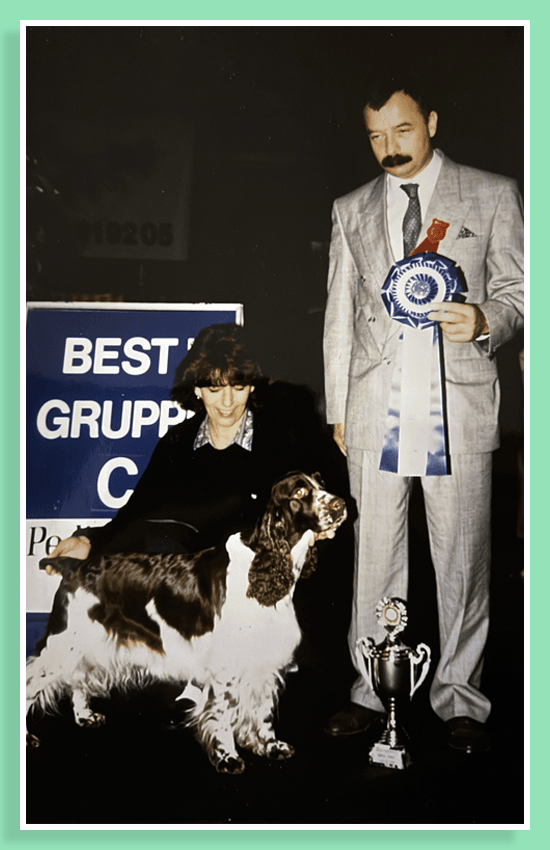
The Springer bitch known as Scarlet went on to be the foundation of a new kennel in the breed, NIMBLEWIT, which kept the same beautiful type which brought them many great wins, including English Springer of the year four times and many group wins and BIS placings. She remains in my mind’s eye as a model of breed type and movement. Her breeder was Sigrun Wallquist, whose Brigadoon kennel produced many winners, and her owners, lovely, modest new owners, were justifiably proud of their girl and sent me this photo, which has been framed in my study for decades. They are no longer involved in the dog world. What a dazzling career they had, and how many great memories they must have from owning such a beautiful dog. What dogs bring to us- the pleasures of breeding, showing and judging. We should always remember these things.
This photo led us nicely to the next breed after lunch, when we focused on English Springers
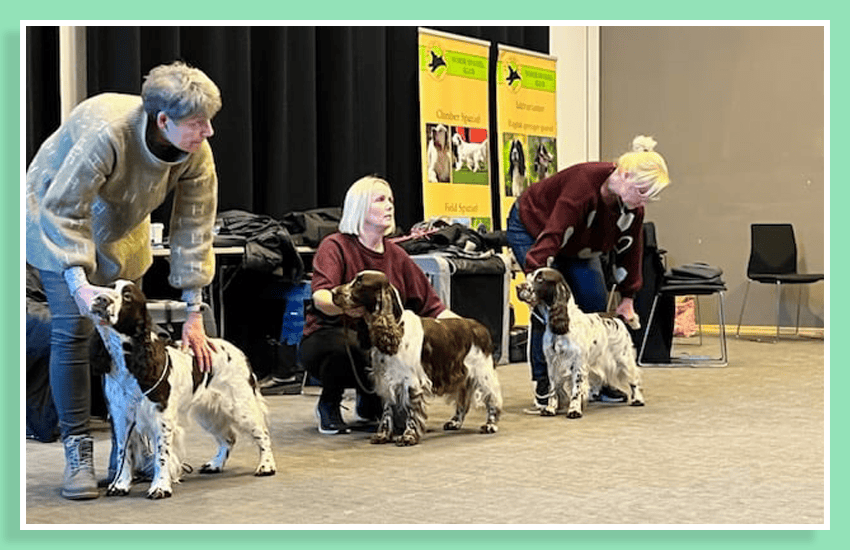
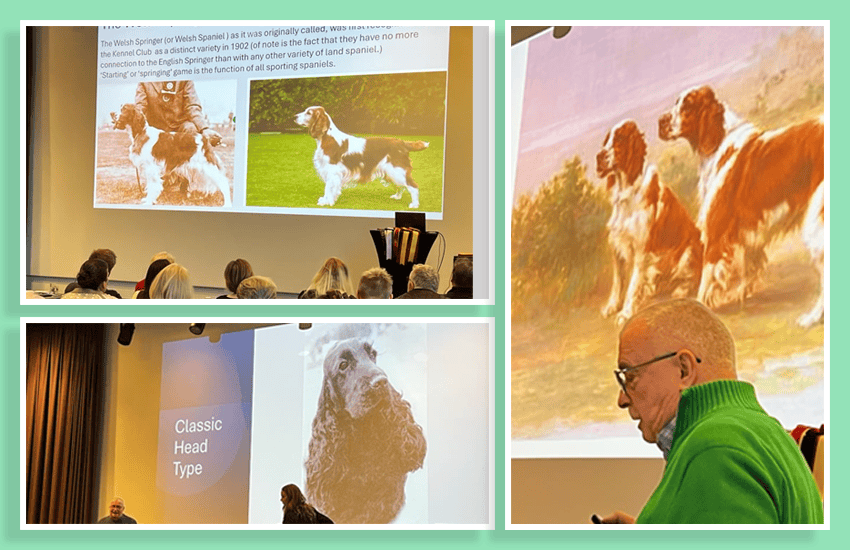
We had English Springers, a breed close to my heart after my father’s love for the breed. It is always wonderful when judging any breed to see a dog enter the ring which is just right for the breed; its breed type shouts out. Here we had a quality bunch with one beautiful dog and a couple of beautiful bitches supported by some youngsters. Breed balance and heads figured a lot in our discussion, and there was a comparison of the two Springer breeds. Again, there was a wonderful atmosphere of appreciation of breed type in the discussions of the dogs.
Saturday evening saw a more formal dinner, delicious (as was the food all weekend, with the unlimited usage of the soft ice cream machine) and with a wine or two, the good spirits prevailed.
An early start at 0900 on Sunday morning, which I thought was a little too early for enthusiastic learning; after all, it was only 0800 for me. But I was wrong and as it was my first love, The Cocker Spaniel, my first coming to me when I was a thirteen year old schoolboy, I was soon fired up, very much aware that amongst the audience for both days was the two Karis of the Norwegian Cocker world representing the Travis and Carillo legacy that has been a part of Cocker history and how good it was to have them there, modest and unassuming, sharing their experience and knowledge. Now the Cockers present comprised a mature blue dog who was first to show up in the morning, so he and his young lady owner settled amazingly to the task, standing on the table on the stage. He had many qualities, especially a wonderful temperament, as he had been little shown as a youngster. On the floor, we were joined by a very cockery black and white yearling male and another veteran blue bitch, a black male and a veteran black bitch. Well, they gave us all food for thought and discussion, and we all agreed that the veteran black bitch, despite not being in the first flush of youth, was a wonderful example of type and temperament, and when she moved, she exemplified breed type and the bustle that goes with it. I loved the black and white male, and we discovered that the mature blue model was the little shown brother to the cocker of the year in Norway, and he ended up as a very happy dog on the day, with a booking for his services at stud coming from one. Well, with the use of many illustrations on my powerpoint we had a wonderful time, and the morning just flew by.
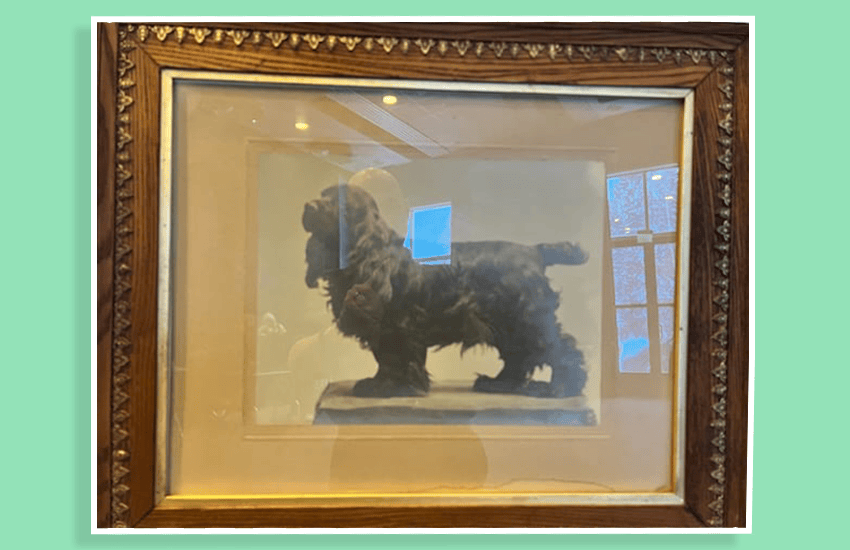
In the afternoon, we had my second breed, the American Cocker, and we were fortunate to have generous input from breeder Karin Linde Klerholm, whose Rotojets have had great success both in Scandinavia and in the USA and winning Top Dog in Norway for 2025 with the black dog Rotojets Revelation, having made many successful raids from Sweden. The kennel also has a couple of BOB awards at Crufts to its credit. Also in the audience was the Statesman-bred Vibeke Paulsen, so along with the Carillo expert, who has owned wonderful dogs in both breeds, we had plenty of experience to share. The dogs present were mainly adolescent males and one mature black and tan bitch. We had many photos on screen and also a wonderful print brought of BILLY OBO, an influential dog in the development of the breed Stateside. And before we knew it, the clock stood at 1600, and it was done. A great weekend of education. Like judging assignments, seminars always bring us new knowledge; no matter how experienced, they are always learning curves.
I started the seminar on Saturday morning, waving a best of breed rosette in the air and then stressing the wording. Best of Breed and its implications. The rosette is meant for the dog that exemplifies most closely the breed standard, and having most breed type in its features and style. I stressed that judgment based on positive virtues and features of type will be more beneficial for maintaining and improving a breed than rewarding a mediocre dog who has no glaring faults but lacks quality and type. That sort of judging can produce sound dogs, but lacking type, and that is the path to generic winners being promoted. When I was starting, it was a common saying that breed specialists judged for type and non-specialists/all-rounders judged for soundness. I might have listened then, but experience and RM James changed my mind, and now I believe that every judge should judge like a breed specialist…a knowledge of type in a breed is essential. Was it Anne Rogers Clark who said,” A sound dog without type is useless”? Breeds change when type is lost, and that should be borne in mind as you walk across the ring to hand out that supreme rosette.
Frank Kane,
I must pay huge thanks and credit to my right-hand lady, Cath Fortune, who is the brain behind my PowerPoint presentations. She more than compensates for my lack of IT skills and my lack of patience. Thank you, Cath!
My thanks also to Frank and Stig for all of these photographs taken throughout the weekend.
Talking about education, my book “Judging the Gundog Breeds” is available here